
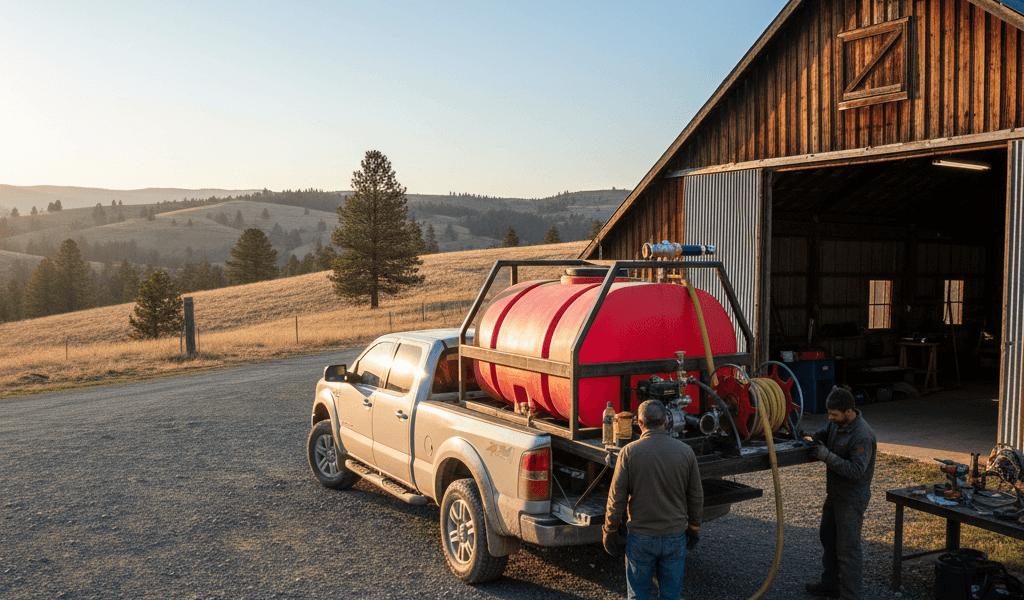
Living in rural areas offers many rewards, but it also comes with unique responsibilities. One critical aspect is preparing for emergencies, especially brush or small structure fires. When fire breaks out in remote locations, every minute counts. Having the right tools at your fingertips can make all the difference in protecting your property and possibly your neighbors.
I have seen firsthand how quickly a small spark can turn into a raging inferno, especially during dry seasons. Relying solely on municipal fire services can be challenging due to distance and response times. This is why building your own fire skid for a pickup truck is not just a good idea, it is an essential one for anyone in a rural setting.
This guide will walk you through the process of how to construct an essential fire skid for rural pickup trucks. We will cover everything from selecting the right components to ensuring safe operation and maintenance. Our goal is to empower you with the knowledge needed to build a dependable system that can help safeguard your home and community.
Understanding the Core Components of a Fire Skid
A well-designed fire skid is a self-contained unit that transforms a standard pickup truck into a mobile firefighting asset. It typically consists of several key parts that work together to deliver water effectively. Knowing each component’s role is the first step in building a system that meets your specific needs and challenges.
The main elements generally include a water tank, a powerful pump, a robust hose reel, and an appropriate nozzle. Each piece must be chosen carefully for durability and performance in demanding situations. We focus on reliable equipment because firefighting calls for dependable tools.
The water tank holds the precious resource for extinguishing flames. The pump creates the pressure needed to spray water over distances. The hose reel stores and deploys the hose, and the nozzle shapes the water stream for maximum effectiveness. These four items form the backbone of any effective fire skid unit.
Selecting the Right Water Tank
Choosing the correct water tank is foundational to your fire skid’s efficiency. Tanks come in various materials and capacities. Polyethylene tanks are popular because they are lightweight, corrosion-resistant, and relatively inexpensive. Steel tanks are more durable against impacts, but they are heavier and can rust without proper maintenance. Consider the trade-offs based on your budget and expected usage.
Capacity is another major consideration. A larger tank means more water, but it also means more weight for your pickup truck to carry. A standard pickup might comfortably handle a 100 to 200-gallon tank. This size offers a good balance between firefighting capability and vehicle stability. Always check your truck’s payload capacity to avoid overloading it. Overloading can be dangerous and damage your vehicle.
Many tanks come with internal baffles. These are dividers inside the tank that prevent water from sloshing excessively during transport. Baffles are incredibly important for maintaining vehicle stability, especially when driving on uneven rural roads. A tank without baffles can cause dangerous weight shifts, so I always recommend looking for baffled tanks.
Choosing the Ideal Pump and Engine Combination
The pump is the heart of your fire skid, and its engine is the power source. Together, they dictate how much water you can move and how far you can spray it. Selecting the right combination is crucial for effective fire suppression. You need a setup that is both powerful and reliable, especially when you are far from help.
Various pump types exist, but centrifugal pumps are common for fire suppression due to their high flow rates. Diaphragm pumps are also an option and offer good pressure for smaller lines. The engine that drives the pump needs to be robust. Many fire skids use gasoline engines because they are readily available and easy to service. However, some larger units might employ diesel engines for extended run times and greater power. I recommend a reliable gas engine from a known brand for most rural applications because parts are easy to find.
Pump Pressure and Flow Rates Explained
Understanding gallons per minute (GPM) and pounds per square inch (PSI) helps you match the pump to your needs. GPM measures the volume of water the pump can move per minute. PSI measures the force with which the water is expelled. For effective firefighting, you need a good balance of both.
A pump with high GPM can quickly saturate an area. A pump with high PSI can project water over a greater distance or through a tighter stream. For rural fires, a pump delivering around 50-70 GPM at 100-150 PSI is often sufficient for initial attack and containment. However, be aware that higher pressures can also be dangerous. Always operate your equipment safely and wear appropriate protective gear. Learning to control the nozzle and stream effectively will improve your firefighting capability.
Essential Hose and Nozzle Configurations
With your tank and pump ready, the next step is to choose the right hoses and nozzles. These components deliver the water to the fire and allow you to control its application. Different types are available, each with specific advantages for various situations. Your choice should depend on the kind of fires you expect to fight and the terrain you need to cover.
Booster hoses are popular for fire skids because they are rigid and can hold pressure, making them easy to handle and retrieve. Forestry hoses are lighter and more flexible but require complete drainage after use. I often see people opt for a combination of both. A good hose reel is also critical. Manual reels are simple and reliable, but electric reels offer convenience, especially if you need to deploy and retract the hose frequently. Think about what works best for your physical capability and how quickly you need to act.
The nozzle lets you adjust the water stream. A common adjustable nozzle can switch from a straight stream for distance to a wide fog pattern for protection or broader coverage. Some nozzles also have a low-GPM setting for conserving water, which is important when your supply is limited. We need to be able to adapt our water delivery as the fire situation changes. So, choose a versatile nozzle.
Mounting and Securing Your Fire Skid Safely
Properly mounting and securing your fire skid is paramount for safety. An unsecured skid can shift during transport, leading to loss of control, especially on rough rural roads. It can also cause damage to your truck or the equipment itself. I always stress the importance of secure mounting because the forces involved with a full water tank are significant.
Weight distribution is a key factor here. The heaviest part of your skid is the water tank when it is full. Position the tank and other heavy components as close to the center of your truck bed as possible. This helps maintain the truck’s balance and handling. Using heavy-duty straps or bolts to secure the skid to the truck bed is non-negotiable. Many skids come with pre-drilled mounting points, so use them. If your truck has a plastic bed liner, you may need to remove it or cut through it to bolt directly to the truck’s frame for maximum security. This direct connection ensures the skid remains firmly in place even under extreme braking or turning.
Ensuring Stability and Weight Distribution
Before you even begin to load your truck, calculate its payload capacity. This information is typically found in your truck’s owner’s manual or on a sticker inside the door jamb. The total weight of your fire skid, including the full water tank and all accessories, must not exceed this limit. Exceeding the payload capacity can lead to brake failure, tire blowouts, and suspension damage, not to mention a very unstable ride.
To distribute weight evenly, place heavier components like the pump and engine as low as possible in the skid’s frame. If you are fabricating your own frame, build it with stability in mind. Some people add extra suspension support to their trucks, like air bags or heavy-duty springs, especially if they plan to carry a large water volume regularly. This can improve ride quality and safety, but it does not increase the truck’s maximum payload capacity. Reinforcing the truck bed with additional crossmembers might be necessary for larger, heavier skids to prevent bed damage.
Additional Features and Safety Enhancements
While the basic fire skid setup is functional, adding extra features can greatly enhance its utility and your safety. These additions can make your rural firefighting efforts more effective and safer for everyone involved. Think about what other tools or supplies might be helpful in an emergency scenario besides just water.
I always recommend including storage compartments on the skid for essential tools. Items like shovels, rakes, axes, and chainsaws can be invaluable for creating fire breaks or clearing debris. A first aid kit is also crucial for treating minor injuries that can occur during firefighting. Beyond tools, consider mounting a bright, visible light bar on top of your truck. This improves visibility during nighttime operations or in smoky conditions. A siren can also be useful for alerting others in an emergency. Communication devices, such as two-way radios, are vital for coordinating with others, especially if cell service is unreliable in your area. We want to be prepared for everything.
Personal protective equipment (PPE) is non-negotiable. Always have fire-resistant clothing, heavy-duty gloves, eye protection, and a helmet available. These items protect you from heat, smoke, and falling debris. Carrying a small amount of foam concentrate and an eductor can turn your water into foam, which is more effective against certain types of fires, like those involving flammable liquids. Finally, ensure you have a smaller hand-held fire extinguisher accessible in the cab of your truck for immediate use on smaller, contained fires or for personal safety.
Testing and Maintenance for Long-Term Readiness
Building a fire skid is only half the battle. Regular testing and maintenance ensure it will perform when you need it most. Neglecting these steps can lead to equipment failure during a critical situation, putting lives and property at risk. I cannot overstate the importance of consistent upkeep for such vital emergency equipment.
Perform monthly checks of all components. This includes inspecting the water tank for leaks, checking all hose connections for tightness, and looking for any signs of wear or damage on the hoses and nozzle. Start the pump engine weekly or bi-weekly to ensure it runs smoothly. Let it run for a few minutes to circulate fuel and oil. Priming the water pump is also a good practice. This involves filling the pump with water before starting the engine to ensure it draws water efficiently from the tank.
Beyond routine checks, plan for annual maintenance. This might involve changing the engine oil and filter, checking spark plugs, and inspecting the pump’s impeller. If you are not comfortable performing these tasks, hire a small engine mechanic. Proper storage of your fire skid is also important. Keep it out of direct sunlight and protect it from freezing temperatures. If you must store it outdoors, cover it to shield it from the elements. A well-maintained fire skid is a reliable asset, so make maintenance a priority to ensure your equipment is always ready for action. You can find more details on building and setting up a rural pickup fire skid to help you get started.
Conclusion: Your Preparedness Makes a Difference
Building an essential fire skid for your rural pickup truck is a significant step toward enhanced preparedness and community safety. I have outlined the key considerations from selecting durable components like the water tank and pump to understanding the importance of proper mounting and ongoing maintenance. The ability to quickly respond to a fire, even a small one, can prevent widespread disaster and protect what matters most. Rural living demands a higher degree of self-reliance, and a well-equipped fire skid epitomizes that spirit of independence and responsibility. Taking the time to plan, acquire the right equipment, and maintain your skid properly provides peace of mind. It also gives you a powerful tool to face the unexpected. We must always prioritize safety and ensure our equipment is in peak condition, because when emergencies strike, there is no room for error. I encourage everyone in rural areas to consider this project, because your proactive approach can truly make a difference in safeguarding our homes and natural surroundings.